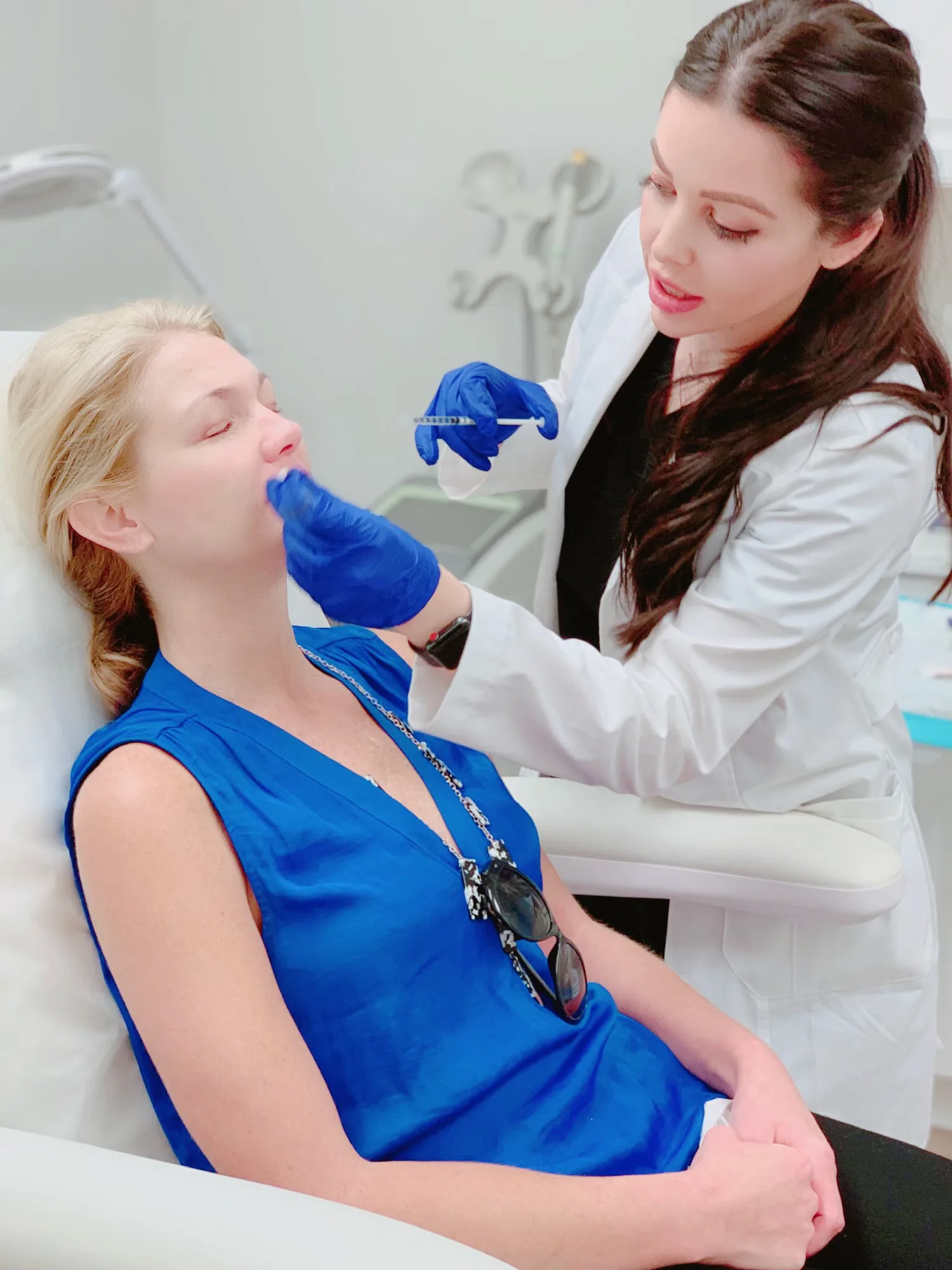
What it is
Revanesse is an FDA-approved family of hyaluronic-acid dermal fillers. The two products we use most:
- Revanesse Versa — indicated for moderate-to-severe nasolabial folds. Known clinically for a smoother integration profile with less post-treatment swelling than several peer products.
- Revanesse Lips+ — indicated for lip augmentation. Soft enough for natural movement; suited to patients who want lip volume without dramatic enhancement.
How we approach it
Versa suits the patient whose nasolabial folds have moved past topical-care range and who is sensitive to the swelling that some other HA fillers produce. Lips+ is a soft, natural-movement option for lip patients — comparable in feel to Juvéderm Volbella, with slightly different molecular characteristics.
The injector selects between Revanesse and the Juvéderm family based on tissue type, your prior response to filler, and the specific contour being addressed.
What to expect
Volume immediate; mild swelling for one to three days; final shape at two weeks. Duration six to twelve months per syringe.
Candidacy
Good for moderate nasolabial folds or lip refinement, particularly in patients who want softer post-treatment swelling. Not for deep structural volume loss, pregnancy, or active facial infection.